Articles & Guides
Grammar breakdowns, vocabulary guides, and cultural insights to accelerate your Italian.
No articles found.
No articles in this category yet.
Check back soon — new content is on the way.
Grammar
Understand the mechanics of Italian — verb focus, sentence structure, affixes, and more.

Avere Fame: Why Italians "Have" Hunger, Not "Are"
In Italian you say Ho fame (I have hunger), never sono fame. Learn the avere + noun rule for fame, freddo, paura, age, and the sono caldo trap to avoid.

C'è vs Ci Sono: There Is/Are in Italian
C'è for one thing, ci sono for many — that's the rule. Master Italian's there is/there are with c'era, ci sarà, è vs c'è, and non c'è nessuno.

Essere vs Avere: Italian Past Tense Made Simple
In the passato prossimo, use avere for most verbs and essere for movement, change, and reflexives — plus the agreement trap English speakers always miss.
Italian Adjective Agreement & Placement Made Simple
Italian adjectives agree in gender and number and usually sit after the noun. Master the -o/-a/-i/-e endings, the BAGS rule, and meaning-shifting pairs.

Italian Articles: Il, Lo, La, I, Gli, Le Explained
Italian has seven words for 'the' — il, lo, la, i, gli, le — but it's two questions, not seven cases. Master gender, sound, and the lo/gli rule fast.

Italian Noun Gender: Rules, Endings & Exceptions
Italian noun gender decoded: -o is usually masculine, -a feminine, but -zione and -tà are feminine, -ore and -ma masculine. Plus the trap words to memorize.
Italian Prepositions: A, In, Di, Da, Su Made Simple
Cities take a, countries take in, origin is di, agents are da. Master the five Italian prepositions a, in, di, da, su and their contractions fast.

Italian Present Tense: -are, -ere, -ire Verbs
Conjugate Italian present-tense verbs fast: one color-coded chart for -are, -ere, and -ire endings, plus the sneaky -isc- group most guides bury.

Italian Reflexive Verbs: Mi Chiamo, Mi Alzo & More
Italian reflexive verbs use mi, ti, si, ci, vi, si — learn the pronouns, conjugate chiamarsi and alzarsi, master your daily routine, and the modal-verb rule.

Mi Piace vs Mi Piacciono: How to Say 'I Like'
Use mi piace for one thing and mi piacciono for many — because in Italian the thing you like is the subject. The full rule, pronouns, and past tense.
Vocabulary
Build your word bank with numbers, greetings, time expressions, and everyday phrases.
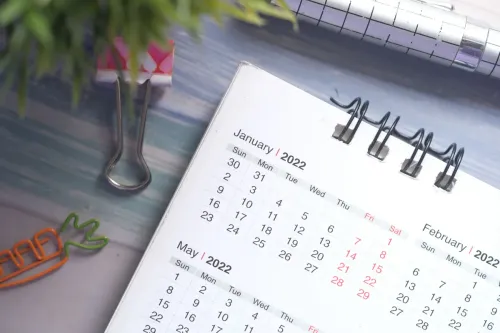
Days & Months in Italian: A Beginner's Guide
Days of the week in Italian are lowercase, all masculine except la domenica, and il lunedì means every Monday. Learn the days, months, dates, and seasons.
Essential Italian Travel Phrases (With Vorrei)
Vorrei means I would like — the politest, most useful Italian travel phrase. Learn five reusable frames to order, ask prices, and find your way in Italy.

Italian Diminutives: -ino, -etto, -one Explained
Italian diminutives like -ino, -etto, and -one signal size, affection, or contempt. Learn to read the feeling, dodge gender flips, and spot false diminutives.

Italian False Friends: 20 Words That Trick You
Italian false friends like preservativo, parenti, and caldo mean the opposite of what English speakers expect. Here are 20 ranked by how badly they bite.
Italian Numbers 1 to 100: Count Like a Local
Learn Italian numbers 1 to 100 by mastering 0-20, the tens, and 3 spelling rules so you can generate any number from ventuno to novantanove on demand.

Italian Question Words: Chi, Cosa, Dove, Quando & More
Master Italian question words: chi, cosa, dove, quando, perché, come, quanto and quale. A usage-first guide that finally sorts che vs cosa vs quale.

Ti Amo vs Ti Voglio Bene: I Love You in Italian
Ti amo is romantic love; ti voglio bene is tender affection for family and close friends. Here's exactly who to say each phrase to in Italian.

You're Welcome in Italian: 8 Ways Beyond Prego
You're welcome in Italian is more than prego: say figurati to friends, si figuri to strangers, di niente, non c'è di che, or grazie a te. Pick the right one.
Culture
Context that textbooks skip — the history, traditions, and nuances behind the language.
How to Order Coffee in Italy Like a Local
Order coffee in Italy like a local: say un caffè (not espresso), pay at the cassa first, drink al banco, and skip the latte trap. Phrases inside.
Italian Dialects vs Standard Italian: A Guide
Standard Italian works everywhere, so relax: this three-layer guide to Italian dialects vs standard Italian shows what to ignore and what to notice.
Italian Hand Gestures: Meanings & When to Use
Italian hand gestures decoded: what the pinched fingers, cheek screw, and chin flick mean, which ones are safe to use, and the one gesture to never make.

Italian Restaurant Etiquette: Mistakes to Avoid
Skip the cappuccino after dinner, never put parmesan on fish, and learn the exact Italian phrases to order gracefully and avoid looking like a tourist.
Tu vs Lei: Formal & Informal "You" in Italian
When in doubt, use Lei. Here's exactly when to use tu vs Lei in Italian — the who-to-use-with map, the verb and possessive shifts, and how to switch politely.
Learning Tips
Strategies and techniques to learn Italian faster and retain more.

Buongiorno, Ciao or Salve? Italian Greetings Made Easy
When in doubt, say salve and mirror the reply. Here's how to pick between buongiorno, buonasera, ciao and salve so your Italian greetings never sound rude.
Most Common Italian Verbs: The 10 That Unlock Speech
Drill these 10 most common Italian verbs first and you unlock past tense, modals, and the progressive — a 7-day plan with every present-tense form to memorize.