How to Order Coffee in Italy Like a Local
June 5, 2026 • ItalianNow • 6 minute read
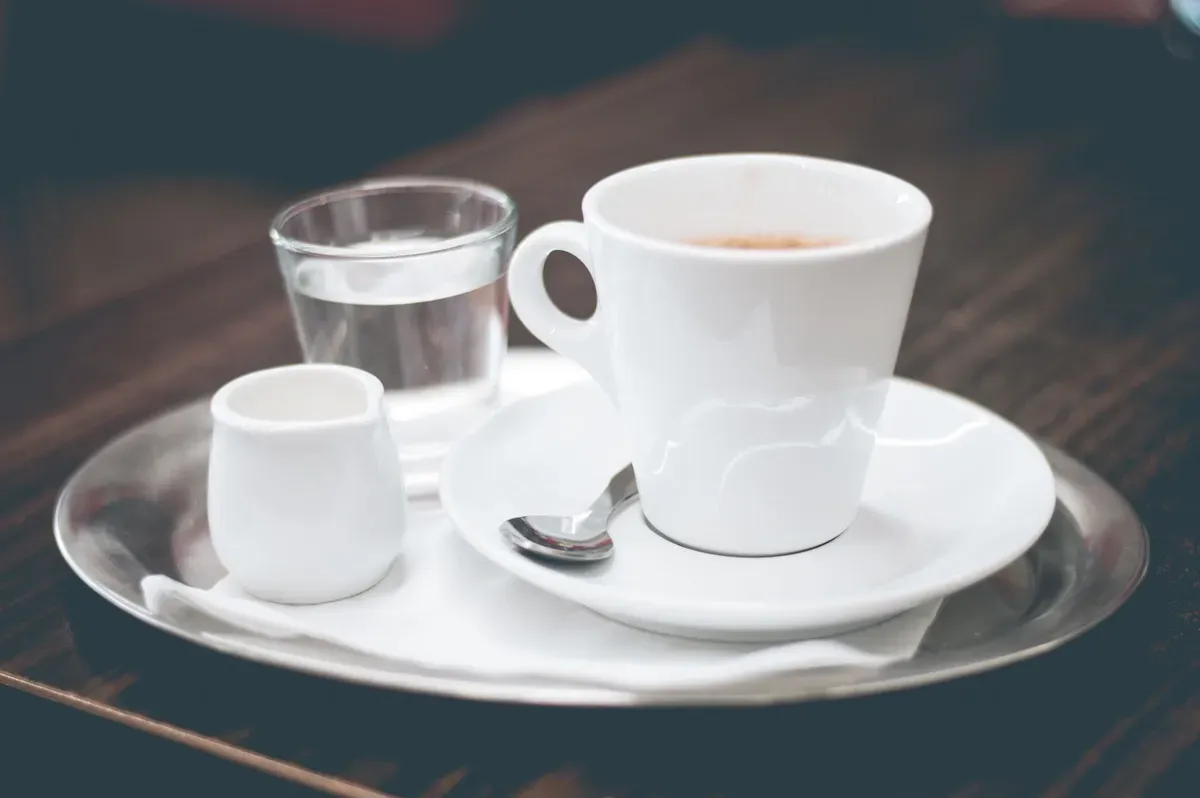
Table of Contents
- First, three words that trip up every tourist
- What to actually say: ask for “un caffè”
- A little grammar: Vorrei, and why caffè never pluralises
- Pay first, then order — the cassa system
- Standing or sitting? al banco vs al tavolo
- The cappuccino “rule,” honestly
- Afternoon alternatives: macchiato vs latte macchiato
- The rest of the menu, in brief
- Putting it together — a 20-second order
Coffee is the easiest daily speaking practice you’ll ever get in Italy. You’ll order at least once a day, the exchange is short and scripted, and the barista has heard every accent under the sun. It’s the lowest-stakes way to actually use your Italian out loud — if you know two things: the handful of phrases locals really say, and the bar mechanics that quietly trip up tourists. Most guides give you one or the other. Here’s both.
First, three words that trip up every tourist
Before any phrase, fix three false friends in your head. They look familiar and mean something different.
| Italian | Actually means |
|---|---|
| bar | a café / coffee bar — not a pub |
| caffè | an espresso (the default 'coffee') |
| latte | a glass of plain milk |
An Italian bar is where you get your morning espresso, pastries, and often a glass of wine — it is not a nighttime pub. caffè means a single shot of espresso, because in Italy the default coffee is espresso. And latte literally means milk, so asking for “un latte” can land you a warm glass of exactly that. For a milky coffee, you want a caffè latte or a latte macchiato — say the full name.
What to actually say: ask for “un caffè”
Italians rarely say “espresso” when ordering. They ask for un caffè. Saying “un espresso” isn’t wrong, but it instantly flags you as a visitor. Here are the go-to phrases, all of which work at any bar.
| Italian | English | When |
|---|---|---|
| Buongiorno, un caffè per favore | Good morning, a coffee please | greet first, always |
| Vorrei un cappuccino, per favore | I'd like a cappuccino, please | polite and easy |
| Prendo un caffè | I'll have a coffee | natural spoken Italian |
| Posso avere un caffè? | Can I have a coffee? | also very common |
| Due caffè, per favore | Two coffees, please | caffè never changes |
Notice prendere (“to take”) doing the work of “I’ll have” — Prendo un caffè is what you’ll hear locals say all day long. Lead with a greeting every time; jumping straight to the order reads as brusque. If greetings are still shaky, our guide to buongiorno, buonasera, ciao and salve covers exactly when to use each.
A little grammar: Vorrei, and why caffè never pluralises
Two small rules make you sound polished:
- Vorrei is the conditional of volere, so it means “I would like” — softer than Voglio (“I want”), which can sound blunt and demanding. Pair it with per favore at the end and you’re set.
- caffè is invariable. The accented final vowel never changes, so it’s un caffè → due caffè → tre caffè. There is no “caffès.” It’s also masculine: un caffè, il caffè.
Pay first, then order — the cassa system
This is the step most tourists get wrong. In busy city bars, train stations, and airports, you pay before you drink:
- Go to the cassa (the till / cash register).
- Tell the cassiere what you want and pagare (pay).
- You get lo scontrino (the receipt).
- Carry the scontrino to the banco (counter) and repeat your order to the barista.
| Italian | English |
|---|---|
| Si paga prima o dopo? | Do I pay before or after? |
| Si prega di pagare alla cassa | Please pay at the till (common sign) |
| Ecco lo scontrino | Here's the receipt |
Not every bar works this way — smaller neighbourhood spots often let you order at the counter and settle up on the way out. When you’re unsure, the single safest phrase is Si paga prima o dopo?. Ask it with a smile and you’ll never be left standing at the banco with no receipt.
Enjoying this?
Travel phrases stick faster with daily reps. Grab our free starter pack of the 100 most useful Italian words — sent straight to your inbox.
Standing or sitting? al banco vs al tavolo
By law, Italian bars often display two prices: one for standing at the counter, one for table service. Locals overwhelmingly drink al banco — at the counter, standing — because it’s faster and cheaper.
| Italian | English | Cost |
|---|---|---|
| al banco | at the counter (standing) | cheapest — the local default |
| al tavolo | at the table (seated) | adds a service charge |
| Lo prendo al banco | I'll have it at the counter | signals the cheap option |
That same espresso costs around €1.20 al banco but can run several euros at an outdoor tavolo in a piazza near a monument. That’s not a scam — it’s the legal two-tier pricing for table service. If you want to sit and people-watch, go for it; just know you’re paying for the seat, not the coffee.
The cappuccino “rule,” honestly
You’ve heard “no cappuccino after 11am.” It’s a custom, not a law, and most posts overstate it. The honest version: Italians simply don’t drink milky coffee after a meal — the milk is treated as a mini-meal in itself and feels heavy on a full stomach. There’s no fixed time. Order a cappuccino at 3pm and the worst you’ll get is a smile. Younger Italians increasingly ignore the rule entirely; in the South cappuccino is mostly a breakfast drink, while an afternoon one is more accepted in the North.
Afternoon alternatives: macchiato vs latte macchiato
If you want a little milk later in the day, the macchiato family is the local move. The two “macchiato” drinks are near-opposites and constantly confused. The trick is the word macchiato itself — it means “stained” or “spotted.” Whatever comes first is the dominant ingredient, and it’s “stained” with a little of the second.
| Drink | Literally | Mostly | When |
|---|---|---|---|
| caffè macchiato | espresso “stained” with milk | espresso, a splash of milk | anytime, even afternoon |
| latte macchiato | milk “stained” with coffee | hot milk, a shot of espresso | a milkier, lighter choice |
| cappuccino | ”little hood” | even milk and espresso | morning |
| caffè latte | coffee with milk | milk-heavy | morning (never just “latte”!) |
So caffè macchiato is mostly coffee, latte macchiato is mostly milk. Get that one distinction and you’ll out-order half the tourists in Rome.
The rest of the menu, in brief
Once the basics click, these let you fine-tune. A doppio is a double shot, a lungo is pulled with more water (bigger but weaker), and a corretto is “corrected” with a splash of liquor like grappa.
| Italian | English |
|---|---|
| un caffè doppio | a double espresso |
| un caffè ristretto | a short, concentrated espresso |
| un caffè lungo | a 'long' espresso, more water |
| un caffè corretto | espresso with a shot of liquor |
| un caffè americano | espresso topped up with hot water |
Want sugar? Just ask for zucchero — it’s usually right there on the counter. And note that doppio, lungo and corretto are all adjectives describing the coffee, which is why the word order is caffè doppio, not doppio caffè. (If counter words like these feel slippery, it’s the same false-friend instinct we untangle in Italian false friends.)
Putting it together — a 20-second order
Here’s the whole thing, start to finish, the way a local would do it. Walk in, greet, order, pay, thank, leave:
| Italian | English |
|---|---|
| Buongiorno! | Good morning! |
| Un caffè al banco, per favore | An espresso at the counter, please |
| Grazie, arrivederci! | Thanks, goodbye! |
Close with grazie and a quick arrivederci and you’ve completed a full, natural Italian exchange — politely, in the right order, at the local price. Try it your first morning in Italy. Order un caffè al banco, sip it standing like everyone around you, and you’ll already feel less like a tourist and more like a regular.
Order like a local: quick check
4 quick questions to see what stuck.
-
What do you actually get if you order "un caffè"?
In Italy the default coffee is espresso, so caffè already means a single shot.
-
Asking for "un latte" in an Italian bar may get you a glass of plain milk.
Latte just means milk. For a milky coffee, say caffè latte or latte macchiato.
-
Match each phrase to what it's for.
Tap a Italian word, then its English meaning to pair them.
Italian
English
-
Complete the polite request: "___ un cappuccino, per favore." (I'd like…)
Vorrei is the conditional of volere — softer and more polite than Voglio (I want).
Related Articles
Keep going with Italian.
Get our starter pack of the 100 most common words — and the occasional new lesson when one's worth reading.